Memories of our Villages

The Bridge on Mill Road, Thurcaston

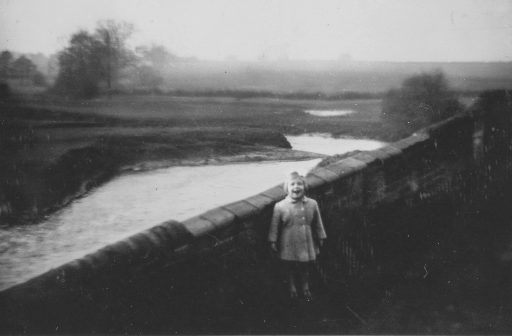
There is no mention of this bridge in Thurcaston’s early records. Perhaps it had been a ford in earlier times. Village people remember being taken to the bridge as small children by their parents to feed the ducks. When they were older they swung across the brook and back on a thick rope which had been attached to a large over-hanging tree branch.


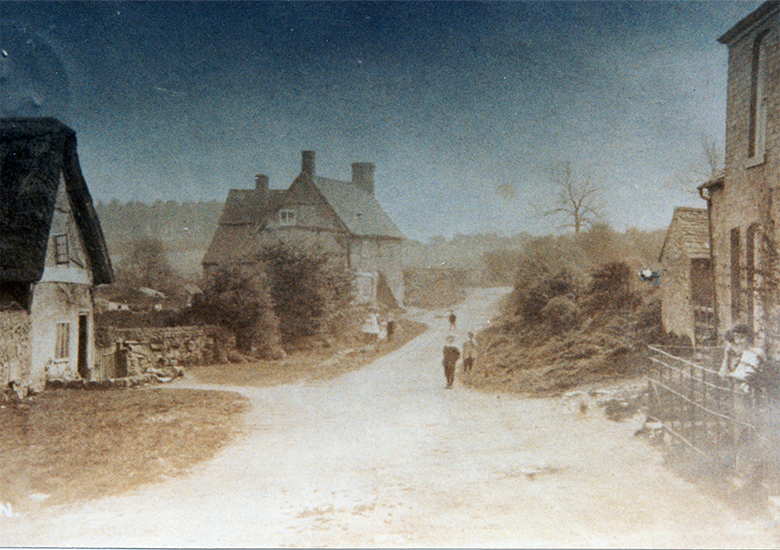
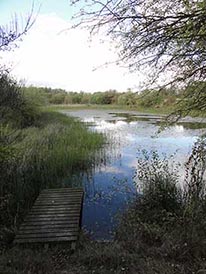
"Duck Bridge"Unknown date (1940s ?). The first houses at Cropston Top can just be seen on the horizon

The bridge was originally built with blue bricks and was known as the Blue Bridge. Like all the other roads in Thurcaston this one flooded regularly each year, and in 1900

the District Council was asked if a wooden bridge at each end of the bridge near the mill’ could be provided.  A footpath was also requested to be made ‘from the bridge to the Railway Station.     (Thurcaston Parish Meeting Minutes, March 23, 1900.)

This wooden walkway provided a handy meeting place for the boys in the village in 1960-70s who would gather there in their wellingtons and watch out for cars when Mill Road was flooded. Unwary drivers, seeing the boys standing in just a few inches of water assumed that it was safe to drive through it. Alas, they soon realised their mistake. When the car spluttered to a halt, the boys would offer to push the car out of the water --- for a fee of course!


The Blue Bridge was replaced, possibly in the 1950s. The licensee of the William IV organised a party to unofficially open the newly built bridge.

Brenda Hooper

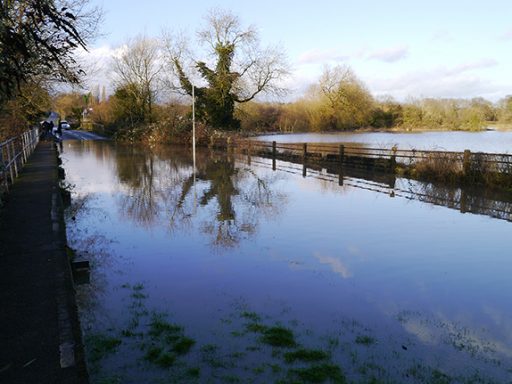
Mill Road flooded in Feb 2020

The Wright Family

Several generations of the Wright family ran the Wheatsheaf at Thurcaston.   Afterwards, some remained in Thurcaston.

Arthur Wright and his wife Gladys lived on Leicester Road, Albert Wright and his wife Lily lived on Anstey Lane. Their spinster sister Elsie Wright lived on Rectory Lane.

For many years Gladys was the Booking Clerk for the Memorial Hall and Lily was the caretaker. If you wanted to rebook the Hall you took care to leave the premises in pristine condition! Lily also led the Sunday School for the chapel in Mill Road.

Elsie, or Little Elsie as she was known, was a tiny lady.  She liked to use the public telephone outside the Old Post Office on Leicester Road. When the lamp failed, she could be seen making her calls by candlelight.

George remembered seeing the cattle being driven from Cropston and beyond, along on the ‘green road’ (Brooky Lane) across the fields to the cattle market at Leicester.

Brenda Hooper

Thurcaston in WWII

Rose Gladys Green from Vine House Farm, Thurcaston is interviewed by her great-grandchildren in 2016 at the age of 104½.

Interviews kindly supplied by Diana Green

Cropston Holiday Home

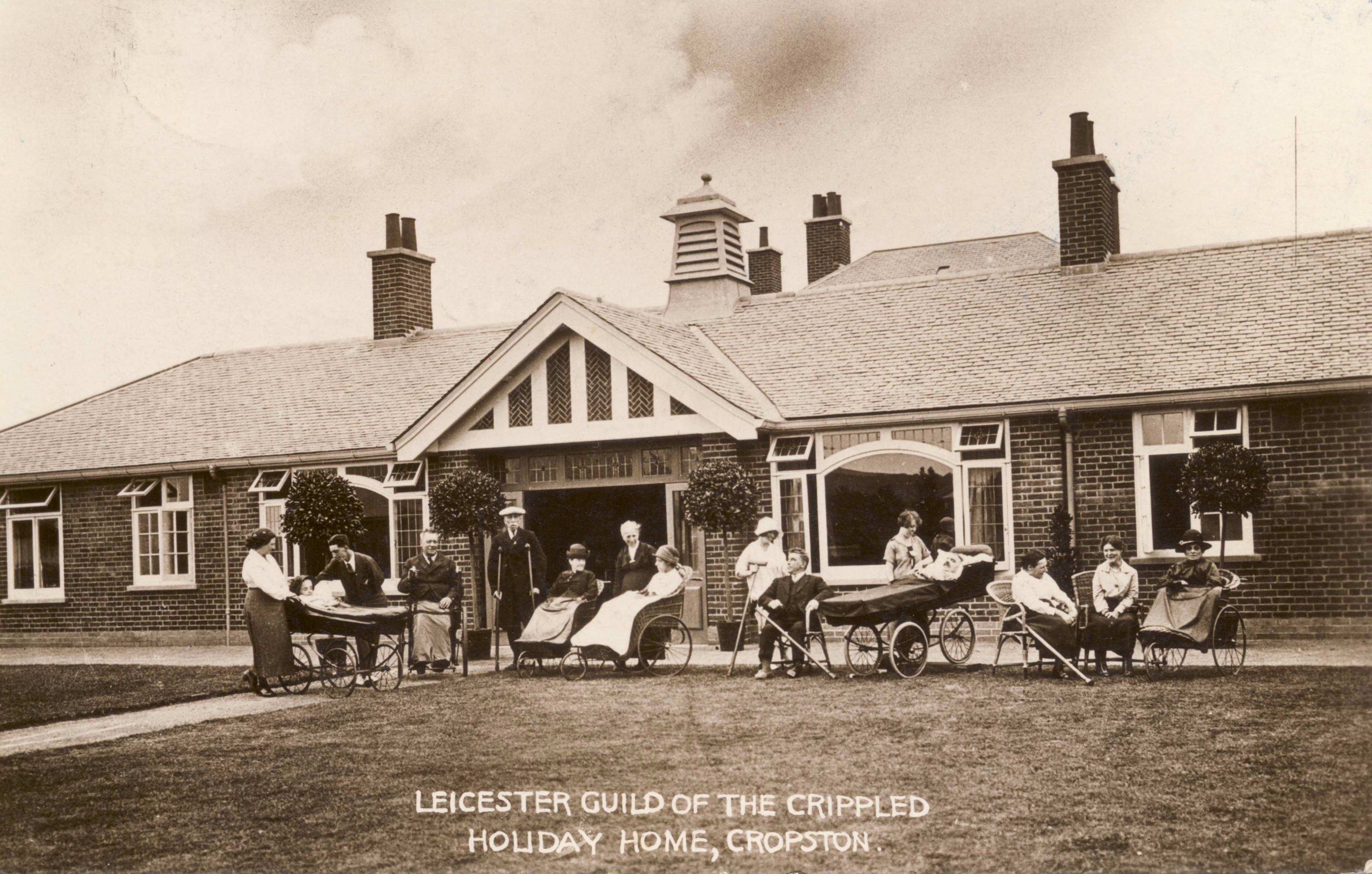
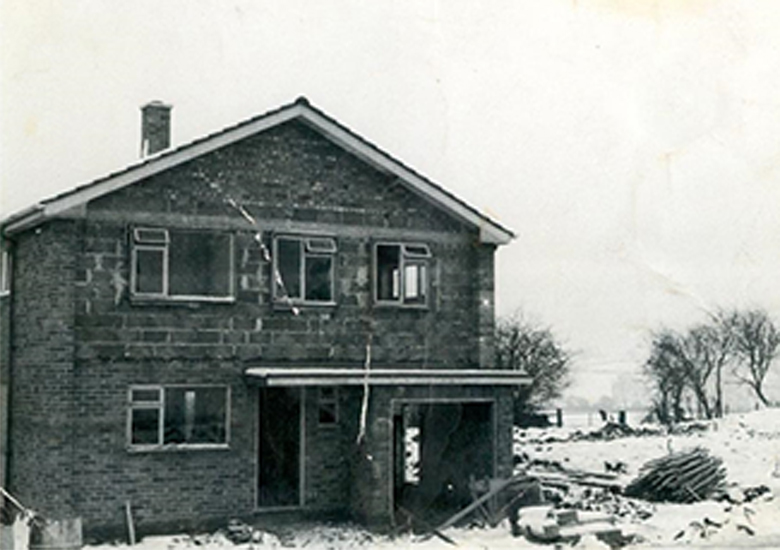
Guild Close is on the site of the Guild Holiday Home in Cropston.

The home was built in 1925 by the Leicester Guild of the Crippled.   The Guild was founded in 1898 and has provided pioneering support for the disabled ever since. It has had different names, changing in line with the public attitudes which the Guild itself helped to shape. It is now called Mosaic (website).

The Guild had a long held a dream of providing a holiday home for its members. The site, just over 2 acres, was purchased at auction in 1923 for £1,010.   It was in the countryside, with beautiful views over towards Bradgate Park, and was within easy reach of Leicester.

Holiday home from rear

The holiday home viewed from the back in the late 1930s. Some guests are in spinal carriages (not prams) which allowed them lie flat.

From 1925 until its closure in 1991, the home was open between Easter and Christmas.   It provided breaks lasting between 10 and 14 days, for many their only holiday.   In 1977 there was a record number of 267 guests.  Later the numbers dropped off, as more varied holidays became available for the disabled.


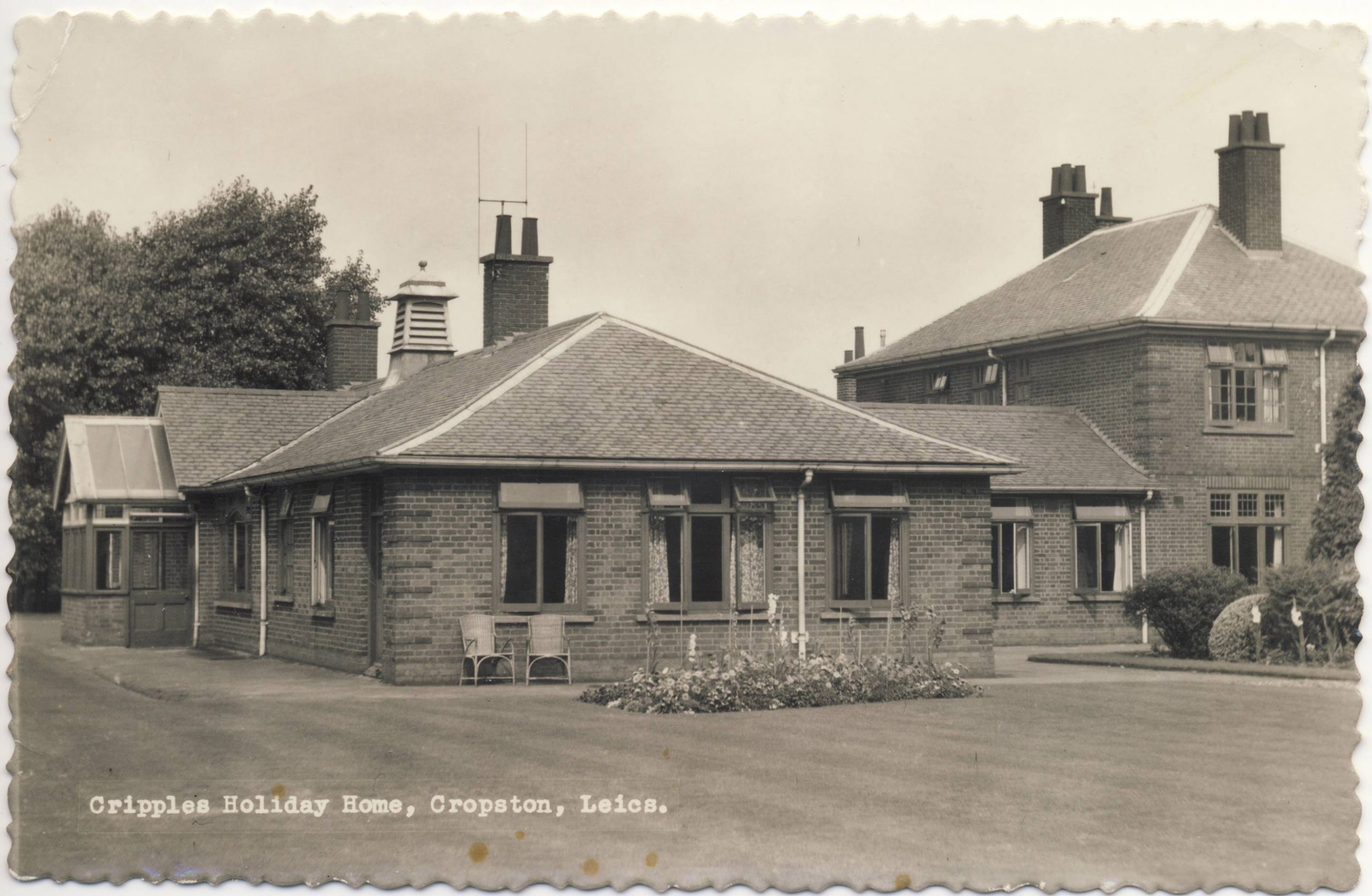
Holiday home from side

Side view of the holiday home, probably in the early 1950s before the single-storey rear section was extended.


Cropston Gallery

Use the left/right arrows to view the pictures at your own pace (they will not advance automatically).

Murder in Naples

The Untimely Death of a Cropston Landowner

Henry Hind

Some branches of the Hind family become very wealthy from quarrying Swithland slate during the 18th and first half of the 19th centuries and owned large areas of land in Leicestershire, including some in Cropston.

Henry Hind (one of numerous Henrys in the family) did not belong to one of the wealthy branches.   He was born in 1834 in Sheepshed where his father was a farmer.

Life in Italy

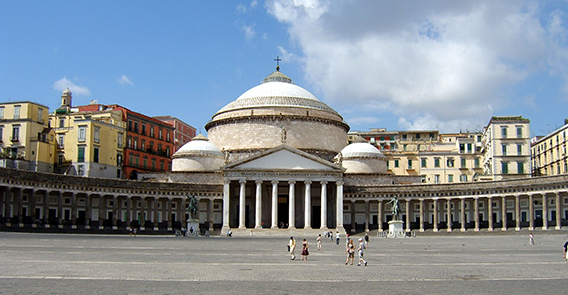
Henry had been in the English militia, but in 1860 he went to Italy to join Garibaldi, a key figure in the Italian wars of independence and the unification of Italy.  When Garibaldi’s legion was disbanded Henry settled in Naples.  He had no income.  At first he tried to earn a living by publishing an English language newspaper.  That wasn’t successful, so he rented a small cottage with a large garden and grew flowers to sell to hotels and on the local market.  He was helped by a gardener who lived in a separate part of this cottage.

Unexpected Inheritance

In February 1875, whilst Henry was living in penury in Naples that he heard that he had unexpectedly inherited a large amount of land from his uncle, with an income of around £300 per year.  The inheritance included land in Cropston.  Henry was now a wealthy man and he planned to buy the house and garden in which he was living.

Disappearance and Discovery

A few weeks later, neighbours heard an argument and Henry Hind shouting for help.   After a few days his gardener reported him missing to the British Consul.   The garden was searched by the local police with no success, including 2 wells helpfully pointed out by the gardener.  After the police had left the British Consul arranged a further search and a third well was found.   The gardener seemed very agitated at this discovery.   The police were recalled, and Henry’s body was discovered in this well.  He had been strangled, and the rope was still around his neck.  There were also 2 blows to his head.

The Trial

Henry’s gardener, Carmino Paesano, was arrested and tried for his murder.

The case attracted worldwide interest – it was reported in newspapers in Europe, Australia and New York.   In London questions were asked in Parliament about it.

There was much speculation about the reason for his murder.   His solicitors gave their opinion in a letter to The Times, mentioning that the Camorra (a branch of the Mafia) was active in the region:

“There is much reason to believe that Mr Hind was murdered by order of the Secret Society of Market Gardeners in Naples.  His great skill in the cultivation of flowers had enabled him to undersell other florists, and a deputation from that society had, shortly before his death, waited upon him and demanded that he should raise his prices, which he had refused to do”. 

Another possible reason was personal animosity.  During the trial, which opened on 7 September, several witnesses testified that Paesano was lazy, incompetent and defrauding his master.

One of the witnesses was Count de Montford, a close friend of Henry Hind, who was married to an English lady:

“The Count admitted that Mr Hind had a theory that servants in this country should be treated roughly and candidly confessed that it was also his own opinion.  The statement was not favourably received by the lower class representatives in the crowded hall, and their dissatisfaction had to be checked”.

The court was packed each day, with another 500 people outside:

“The court was crowded long before the time announced for the beginning of the trial and the galleries, which can only be entered by persons supplied with tickets, were actually thronged with ladies, mostly English, and some of the best Neapolitan families now in town.  An extra picket of infantry had been provided to preserve order amongst the rougher class of spectators who occupied every corner in the rather diminutive hall in which the Naples assizes are held”.

Henry Hind’s family employed Signor Pessina, a well-known orator.  This is an extract from his speech:

Henry Hind, setting aside all obstacles, severing family ties, and incurring the displeasure of friends at home, unselfishly abandoned all his prospects to offer his services to Garibaldi, the then hero of the day.  Henry Hind accompanied the great condottiere to Naples, which he contributed in his limited sphere to free from the hated yolk of misgovernment and the tenebres of ignorance.  He  Henry Hind must therefore not be considered as a foreigner; Henry Hind is an Italian citizen: Henry Hind sacrificed all for Italy, and especially for our beautiful Naples, which he loved so much that even when he had an accession of fortune he never entertained for one moment the idea of leaving us.  ...  And Henry Hind, after 15 years spent amongst us, and during which period he is proved by searching evidence to have been a hard-working, struggling, modest and always honourable man, even under circumstances which would have discouraged stronger hearts, Henry Hind is foully murdered – murdered in such an atrocious mode that it has sent a thrill of horror through every heart and every soul.”

There was much more, in a similar vein.   Professor Pessina had risen to speak at 11 o’clock and completed his address at 5pm, when he was loudly applauded.

As the trial went on, there were large crowds outside the courtroom:  these may have been assembled by the Camorra in an attempt at jury intimidation.   Things got rather heated, and there was such an anti-English sentiment that a planned visit by some ships from the British Navy had to be postponed.

The trial lasted for 10 days, and Paesano was found guilty of complicity in the murder.   He was sentenced to 16 years hard labour, then 5 years police surveillance.

There was much protest from the English at the leniency of the sentence.
Who inherited next?

Henry had died childless and his land was inherited by his cousin, another Henry, the father of the Hind Sisters.

In 1897 the Hind Sisters sold part of this land to the Cropstone Land Society.

Sources

Details of the murder and trial were obtained from contemporary newspaper reports, mainly:

  • Leicester Chronicle and Leicestershire Mercury of March 20 1875
  • London Standard reports of trial between September 3 and 21 1875

Cropstone Land Society

The Cropstone Land Society was formed in the 1890s, part of a movement to enable ordinary people to own land and provide for themselves.

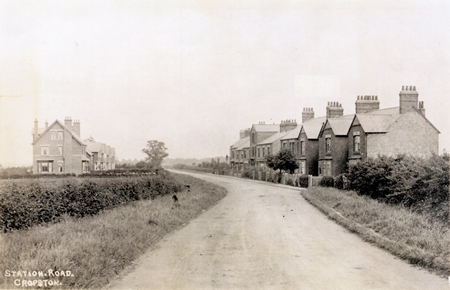
In 1897 the Society bought "Three Acre Close" from Misses Sarah Jane and Henrietta Maria Louisa Hind (the Hind Sisters) for the sum of £322 10s 0d.

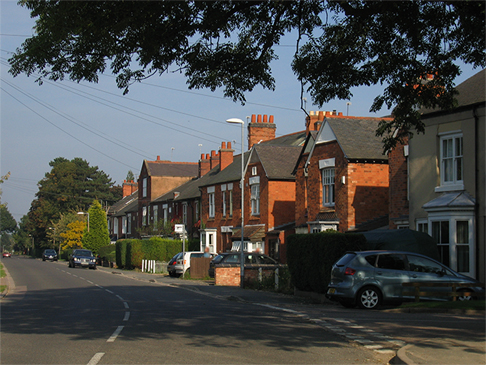
The land fronted onto Station Road, next to what is now Sandham Bridge Road, and was at that stage outside the village of Cropston. The plot was divided into 17 strips, most with a frontage of 22ft 5in and lengths varying from 309ft to 362ft. These long narrow strips were large enough for their owners to be self-sufficient.

A row of mostly semi-detached houses was built, many with plaques giving their names and dates between 1898 and 1905.

This was the first development near the village and was nicknamed "The Klondike" after the Gold Rush which was then at its peak.

The Cropstone Land Society was dissolved in 1900.

Tourism at Cropston


After the building of the Reservoir in 1870, Cropston became a tourist destination.

The Reservoir Hotel (now the Badger's Sett) catered for large parties from 1870.

In the 20th century, after the opening of Rothley Station on the Great Central Railway and the advent of the motor car, others joined the tourist industry.


Mrs Beatrice Bent's Holiday Park

Mrs Bent advertised in newspapers and trade directories from the mid 1920s to the early 1940s.

Her 10 acre holiday park overlooking the reservoir offered lunches, teas, camping, caravans, bungalows, tennis courts.  Motor parties etc catered for.

This was probably the area between the reservoir and Causeway Lane, part of which is still a caravan site.


Porlock House

During the late 1920s and 1930s the Misses Adcock were taking boarders at Porlock House.

The Badger’s Sett

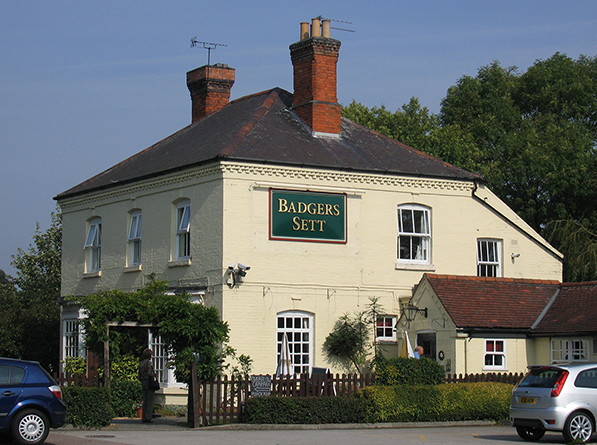
The Badger's Sett (pictured in 2008)

The Badger's Sett, previously known as The Reservoir Hotel and The Reservoir Inn, dates from about 1870, when Cropston Reservoir was built. A brief history is given below.

Farmland

Farmland

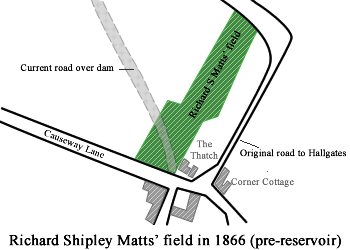
Just before Cropston Reservoir was built, the land to be flooded and most of the surrounding fields belonged to the Bradgate Estate.   However, one field belonged to Richard Shipley Matts, who farmed this and various other adjoining fields leased from the Grey family at Bradgate.

The new road over the reservoir dam cut off one corner of Shipley Matts' field, and the land he had been leasing from the Greys was appropriated for the reservoir and dam.

The Shant

Refreshing the Navvies

The presence of numerous navvies building the dam for Cropston Reservoir (completed in 1870) provided an obvious commercial opportunity, and beer was sold in a shed known as "The Shant".

It is likely that this was on Richard Shipley Matts' field.

Reservoir Hotel

New Building

The Reservoir Hotel (the older part of the current building) was built before 1876 (see below), probably around 1870.  It was an attractive setting, with large lawns overlooking the new reservoir.

Thomas Shipley Matts took over the business when his father Richard died in 1873.

Catering for Tourists

In September 1876 Thomas Shipley Matts applied for (and obtained) a spirit licence for his beerhouse.

During the application he described the hotel as "exceedingly well-built", possessing "abundant accommodation", including a shed on the front lawn which could accommodate 200 people.   He catered for large parties of day-trippers in the summer, and "gentlemen of position" sometimes stayed, complaining that they could not obtain liquor there.

Mr Reeve, gamekeeper at Bradgate Park, claimed that "more people came through Cropstone now that the reservoir was opened than Newtown".


Thomas Shipley Matts continued to run the Reservoir Hotel with his sisters Louisa Adams Matts and Hannah Matts until Thomas and Louisa died in 1902.   The hotel was then put up for sale.

20th Century

We know little about the Reservoir Hotel in the early 20th century.

However, in 1939 it was one of a number of hotels where the magistrate renewed the licence only on condition that substantial improvements were made.   In 1941 it was in such a poor condition that the bailiff, Mr Barratt, came to shut it down.  Instead he bought it and turned the skittle alley into a successful restaurant.

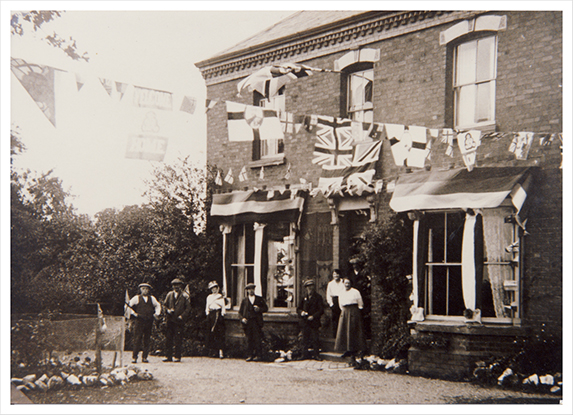
1918: Welcoming the troops home

The Badger's Sett

The Reservoir Inn is now owned by the Vintage Inns chain and has been renamed "The Badger's Sett".   It continues to serve meals to Cropston's tourists and residents.

More about Tourism in Cropston.

Cropston Enclosure

(What was enclosure?)

The Cropston Enclosure Act was passed by Parliament in 1781, despite one landowner (probably Richard Burchnall) withholding his consent.

The three pre-enclosure open fields named in the documents are Bybrooke Field (to the north), Bashpool Field (to the east) and Open Dale Field (to the south).

Examples of old names of other features of the landscape are Vincent Flatt, Slate Bridge Common and, intriguingly, Windmill Lane.

Three commissioners and a surveyor were appointed to assess the various claims and re-allocate approx. 350 acres of land. The commissioners were

  • Henry Walker of Thurmaston,
  • John Sultzer of Burton Overy
  • John Davis of Bloxham in Oxfordshire.

Davis’s role was no doubt to represent the interests of the church because the Rector of Thurcaston at the time was actually resident in Bloxham.  Sultzer and Walker would have been appointed to represent the major landowners. There seems to have been a difficult relationship between them because Sultzer made a will the following year in which he referred to “that rascal Henry Walker, a bankrupt.”

The commissioners:

  • Laid out the routes of all the roads and public footpaths, much as we see them today.
  • Next they allocated one-seventh of the land to the Rector to replace the system of annual tithes which landowners previously had to pay
  • They then divided up the remaining land proportionately, ordered the owners to plant hawthorn hedges around the fields and decided who was responsible for their upkeep. However, any bridle gates were ordered to be left unlocked so that the Lord of the Manor (the Earl of Stamford), his friends, servants or attendants could pass through them for hunting, fishing or shooting!

The commissioners’ costs (£930 16s 4d) were shared between the landowners other than the Rector.

The decisions made by the commissioners were recorded in an Enclosure Award. It is an impressive document, hand-written on 15 large sheets of parchment, which can be inspected at the Record Office in Wigston. Sadly the map that would have accompanied it is missing but the Award contains enough detail for the map to be reconstructed with a fair degree of confidence.

The decisions made by those three men over 200 years ago had a big influence on the subsequent pattern of development and largely shaped Cropston as we see it today.

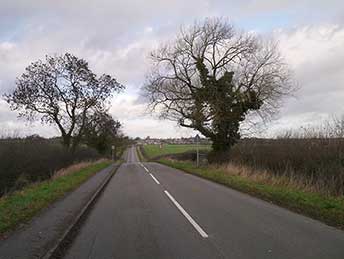
Cropston Road, between Anstey and Cropston. A straight road, at least 40ft between ditches, as laid out in the Cropston Enclosure.  © Peter J Smith 2015


© Peter J Smith 2017

The Waterworks

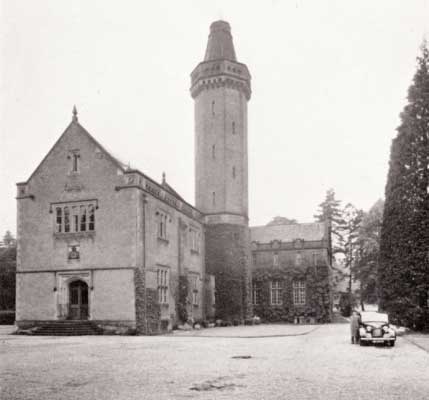
The reservoir was not sufficiently high to allow water to gravitate to Leicester, so a pumping station was required.
Two beam engines were driven by coal-fired boilers.

The water was passed through sand filter beds, but these were too slow and were eventually replaced by mechanical filters.

The tower gave a view over the reservoir to check for any problems.

Navvies at Cropston

At the time the reservoir was built Cropston's permanent population was around 100.   This was dwarfed by the number of building workers required for the reservoir, who lived in temporary accommodation near Hallgates.

An additional constable was appointed at the water company’s expense to keep order. His wages were 20 shillings a week plus clothing.

However, there were inevitable problems of disorder:  in July 1870 there was an affray between the Cropston navvies and the quarrymen at Mountsorrel.  Frederick Thornton appeared before the Police Court at Loughborough charged with inflicting serious head injury with an ale glass.

In a letter to the editor of the Leicester Chronicle and Mercury the Registrar for the district claimed that the questionable morals of the navvies were partly responsible for an increase in the local death rate:

"The Rothley sub-district includes Cropston and the New Bradgate Reservoir; in the immediate neighbourhood of which the 500 or 600 workmen employed upon it have had to be lodged. The habits of this migratory class, and their morals together, quite satisfactorily account for another percentage of increase in the death-rate in this district."

The Leicester Chronicle and Leicestershire Mercury   March 11th 1871


The Shant

The commercial potential of the temporary population was not lost on entrepreneurs: Billy Booten set up a beer tent known as "The Shant" (short for shanty).

See also The Badger's Sett.

Building Cropston Reservoir

The whole project was completed in 1871, after the inevitable problems of soaring costs (£142,000 against a budget of £126,000) and extended timescales.

The Dam

A dam was built at the eastern end of the shallow valley. The dam is 760 yards long and rises to a height of 51 feet at its highest point, which gives a depth of water of 38 feet.

The dam is constructed of Swithland slate with a centre core of puddled clay, obtained from land to the north side of the reservoir still known as "Puddledyke".

Puddledyke Clay Pit


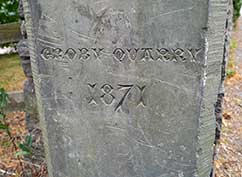
Slate gatepost at village end of the dam


New Road

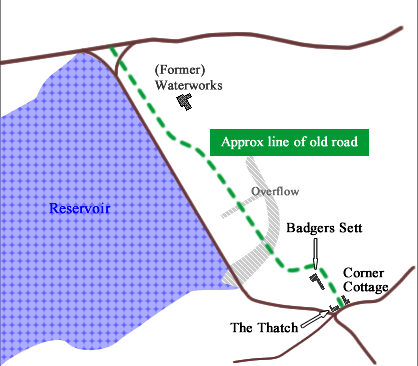
Sketch showing original line of redirected road
© 2017 Thurcaston & Cropston Local History Society

 The road from Cropston to Hallgates was redirected over the new dam to make space for the new waterworks and filter beds.  

The first section of the original road, from its junction on Station Road between The Thatch and Corner Cottage, still exists.

Cropston Reservoir

Why a reservoir?

The city of Leicester was faced with a growing population at a time when, after epidemics in 1831,1832 and 1847, cholera was a major concern. Thornton Reservoir had been built in 1854, but another source of clean water was needed.

In 1866 Parliament passed the Leicester Waterworks Act, enabling the construction of Bradgate (later Cropston) Reservoir.

Why here?

In the words of the chief Engineer, Mr Hawskley, the advantages of Bradgate over the other sites under consideration (Bardon, Groby and Bagworth) were:

 " the finest stream, the best water, the cleanest drainage and, under all consideration except that of pumping, the most advantageous scheme is the Bradgate "

Who lost land?

In September 1867, 180 acres of land was purchased for a cost of £24,000.

Most of the land required for the reservoir, dam and waterworks belonged to the Bradgate Estate. Lord Stamford insisted that a stone wall be built around the boundary to separate the deer park from the reservoir, instead of the proposed iron railings. This wall, 1,500 yards long was eventually built at a cost of 8s 10d per yard.

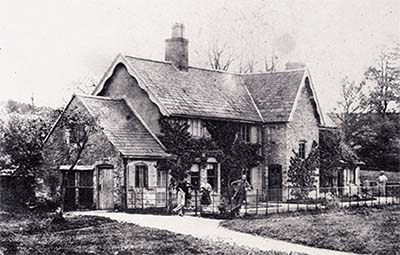
Joseph Reeves, Head Gamekeeper, outside his house.

Some of the Bradgate Estate land was part of the deer park, but most was farmland let out on very long leases.  One farmer, Joseph Allen, lost virtually all his farm. Two members of the Matts family had theirs considerably reduced in size.

The Gamekeeper’s house and land, together with a nearby bridge, were also in the area to be flooded.   The house, together with its stables and outhouses, were demolished and the bricks sold.

Part of the footpath between Anstey and Hallgates was submerged, as was the site of the old rabbit warren (or conery).